To most people, the word "safari" conjures up a very specific scene: a dusty 4x4 rolling across the African savannah, scanning the horizon for signs of wildlife. While that exists, and is certainly the most iconic interpretation, it's far from being the only type of safari available to you.
Quickly, a refresher: the word "safari" itself comes from the Swahili word safiri, meaning "to journey”. This journey through landscapes and ecosystems nowadays takes many forms across various continents, from walking expeditions and river journeys to marine encounters and conservation-led experiences.
So, understanding the different types of safaris available to you not only expands what's possible on your own journey, but also helps you choose the one that best aligns with how you want to explore.
Let’s get into it.
Safari by Vehicle
As mentioned, a vehicular safari is the image most people instinctively associate with Africa. Yet, even here, there is a distinction to be made between open-air vehicles versus ‘pop-top’ vehicles.
With no windows or barriers, open-air vehicles mean you’re fully exposed to the sights, sounds and even scents of the bush. This makes the experience feel both immediate and immersive. There's also a strong tracking element, with highly trained guides and trackers reading the landscape in real time to find animals. A great example of this is in the Greater Kruger ecosystem, where close-up encounters with the wildlife and the partnership between guide and tracker turn each drive into a layered story of animal behaviour.
Meanwhile, most East African operators opt for pop-top vehicles given that moving between different national parks is a defining feature of safari in this region. While the vehicles remain closed while driving on highways (usually a legal requirement), the roof can lift to allow for unobstructed standing views whilst in wildlife areas. Though it may feel less "wild" from the outside than an open-air vehicle, this comes with its own advantages. Ideal for longer distances, it also offers protection from the elements, and it makes safaris more comfortable in cold and wet weather or in dusty conditions.
Safari by Hot Air Balloon
This is where your perspective on a safari can start to shift. Floating silently above the landscape at sunrise, you’re trading the ground-level detail of a vehicle safari for sweeping, cinematic views of entire ecosystems.
What makes hot air balloon safaris particularly appealing is the ability to witness animal migration at scale, particularly powerful over the Serengeti during the Great Migration, when hundreds of thousands of wildebeest and zebra stretch across the horizon. With the silence it brings, it often feels more peaceful and epic, and you're also able to see broader patterns. This may be herds moving, mountain ranges or rivers carving through endless plains.
Safari by Train
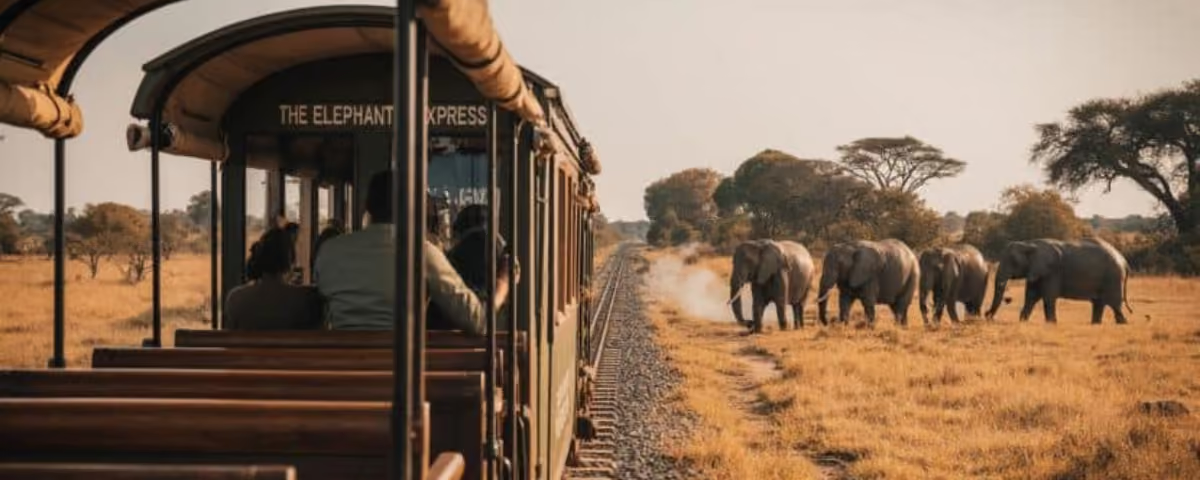
One of the more unexpected ways to encounter wildlife, a train safari allows you to experience a more steady, almost meditative way to observe animals as you pass through the remote landscapes along the railway lines. What makes a train safari truly unique is the blend of nostalgia with novelty, and a standout example of this is The Elephant Express in Hwange National Park. The rhythm of train travel encourages passengers to slow down, making sightings of elephant, giraffe and plains game from open-sided carriages something really unique.
Safari by Horseback
One of the most immersive ways to take in the rugged landscape of Patagonia’s Torres del Paine is on horseback. This is a kind of safari that is steeped in a history that is inextricable from the land itself.
Gauchos are skilled horsemen, descendants of early Spanish settlers who have been herding cattle and sheep across Patagonia for centuries. To ride alongside them, through grasslands and past glacial lakes, is to gain insight into their intimate knowledge of the terrain. This knowledge has been passed down through generations, and enables you to experience a rich culture that is still very much alive today.
Safari by Boat
A boat safari brings you into a different dimension of the ecosystem, where wildlife sightings are shaped by the water. In Zambia, motor-powered tender boats navigate the lifeblood that is the Zambezi River. Drifting past its banks, passengers can experience the landscape in a similar manner to local wildlife and witness close-up sightings of elephants crossing, hippos surfacing, and predators coming down to the waterline to drink. And when the afternoon warms up, you can use the boat to enjoy a drink on a sandbar in the middle of the river.
Safari by Ship
If you head a little further north of Africa (and keep going), eventually you’ll end up at the North Pole. That is if you are onboard one of the few ships that can make its way through the Arctic ice to get there. Cue Le Commandant Charcot, a 245-passenger luxury polar icebreaker that can comfortably navigate ice up to three metres thick. Le Commandant Charcot takes safari somewhere other expedition ships can't follow like all the way to 90 degrees north, giving the voyage an intimate feel at the literal top of the world.
Safari by Smaller Ship
At the other end of the spectrum (or should we say Pole?) is a small-ship expedition safari through Antarctica. This is safari in its purest sense: a journey into a remote, unknown environment.
Replace epic savannahs with glacial fields and land-roaming mammals with marine life, and you will quickly see why most Antarctic explorers opt for small expedition ships (no more than 130 passengers) over hulking cruise ships. Offering greater reach of locations and daily landings on ice, a small-ship polar expedition allows you to experience the humbling appeal of Antarctica’s sheer scale, accompanied, of course, by almost otherworldly encounters with penguins, orca, whales, and seals (to name just a few).
Safari by Much Smaller Ship
Take it even one step further, and you will find yourself on an even smaller safari ship, this time in the Galapagos Islands, with no more than 20 passengers on board.
In a place where animals have evolved without massive outside influence, encounters feel unusually close and show little to no fear. The smaller the vessel again means that more remote landing sites are within reach. A safari through the Galapagos on such a vessel makes for an infinitely more flexible itinerary that can include activities like snorkelling with sea lions to walking among marine iguanas. Indeed, sitting on a remote beach you also might feel the same sense of inspiration as Charles Darwin and his evolutionary insights.
Safari by Canoe
The smallest of the boat safaris arguably also offers the most intimate form of safari. In the Okavango Delta, journeys by mokoro (a traditional dugout canoe) offer silent and slow movement through narrow waterways that heighten every sensory detail. With the absence of engine noise, you can focus on smaller things, like bird calls, water ripples and the movement of reeds in the wind. It also makes for less intrusive, and far more heart pounding, wildlife encounters with resident elephants and buffalo, not to mention smaller yet equally delightful animals like reed frogs.
Walking Safari
Back on land, walking safaris give you the opportunity to witness incredible ecosystems up close, led by expert guides to offer a more educational approach to the safari experience.
In regions like South Luangwa in Zambia, walking safaris go beyond animal sightings and more into experiencing the bush as a connected system. Unlike a vehicle safari, you're not just chasing sightings. Instead you're learning how to read the signs and patterns of local wildlife, leaving you with a much more intimate understanding of the life of the wild than you may expect.
Safari by Gorilla Tracking
Gorilla tracking safaris are unlike anything else. Built around the single objective of finding and spending time with one specific species in their natural habitat, there are few experiences that stay with you as vividly as an hour spent within reach of an entire family of gorillas. Following tracks through dense forest in Uganda's Bwindi Impenetrable Forest, hours of anticipation suddenly come to fruition when you finally locate them. This gives gorilla tracking safaris a unique emotional intensity, in large part formed by an acute awareness of the rarity of the experience and the sense of shared genetic history with them.
Night Safari
Night safaris revolve around discovering how much of the bush's activity actually happens once everyone else has gone to sleep. Using dimly-lit spotlights (or even lasers and iPads in some locations) to ensure natural behaviour isn't disturbed, guides track down leopards on the move and hyenas en route to a kill. If you're extremely lucky, maybe even shyer creatures like aardvarks and pangolin.
And, knowing full well how active nocturnal wildlife can be while guests are fast asleep, Jabali Ridge in Ruaha National Park has set up night vision camera traps which start recording at the slightest sign of movement. This has allowed them to capture some incredible footage of their many night-time visitors, whether it’s a lone lion in search of a midnight snack or the rare pangolin scuttling along to its next hideout.
Safari by Self-Drive
This is something entirely different for you, which allows you to move completely at your own pace and chase your interests. A self-drive safari, for example one through the vast landscapes of Namibia, trades guided structure for control over your own day-to-day. This means pulling over for as long as you like at sightings of lions and rhinos, chasing the sunrise over Sossusvlei's dunes, or taking a detour to stop in at a local restaurant for some secret cuisines.
Safari by Camping
Why be bound to one location when you can follow the wildlife as it moves?
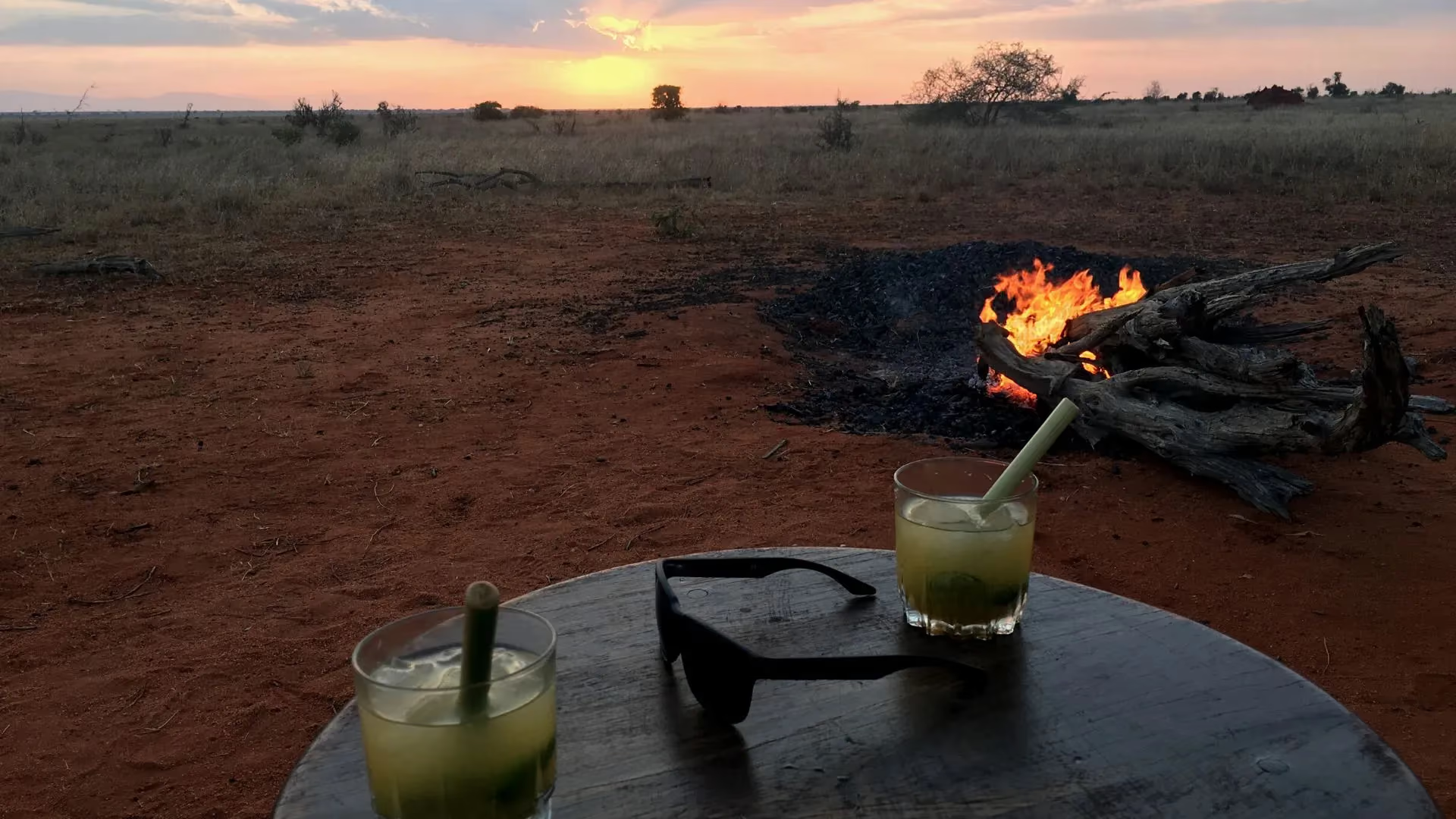
On a camping safari in Botswana, mobile camps are pitched in locations that for incredible sightings without imposing on the natural movement of local wildlife. This means you spend your days in unfenced wilderness with nothing but a tent wall in between you and the bush, close enough to hear elephants moving past camp or lions calling across the floodplain. What you get in exchange for fixed comforts is proximity to one of Africa's truly untamed ecosystems. And, though your location may change from day-to-day, your guides and crew travel alongside you the entire way, making the whole thing seamless.
Hide Safari
A hide safari is one where, instead of searching for animals, they make their way to you.
Oftentimes strategically positioned in front of waterholes frequented by the likes of local elephants and buffalo, hide safaris let guests see and photograph animals from just a few feet away. With no vehicle engine running or need for movement, local wildlife make their way uninhibited towards the waterline and waiting viewers. Here, you trade the pace of a game drive for the peace that only comes with peeking behind the facade for real Africa.