Let’s get straight to it: being asked to choose a favourite polar region is a bit like being asked to choose a favourite child. We probably all have one, but we still love the other(s)!
From the outside, it can be hard to distinguish clearly between the Arctic and the Antarctic. Both are seemingly cold, both are remote, and both have captivating stories of early explorers suffering through feats of hardship in the unknown.
But despite a little overlap, each polar region has its own distinct personality. So, let’s go through the basics and distinguish the northern reaches from the frozen south.
The Wild (and Water) Life
The Arctic has greater diversity, whereas the Antarctic has greater reliability.
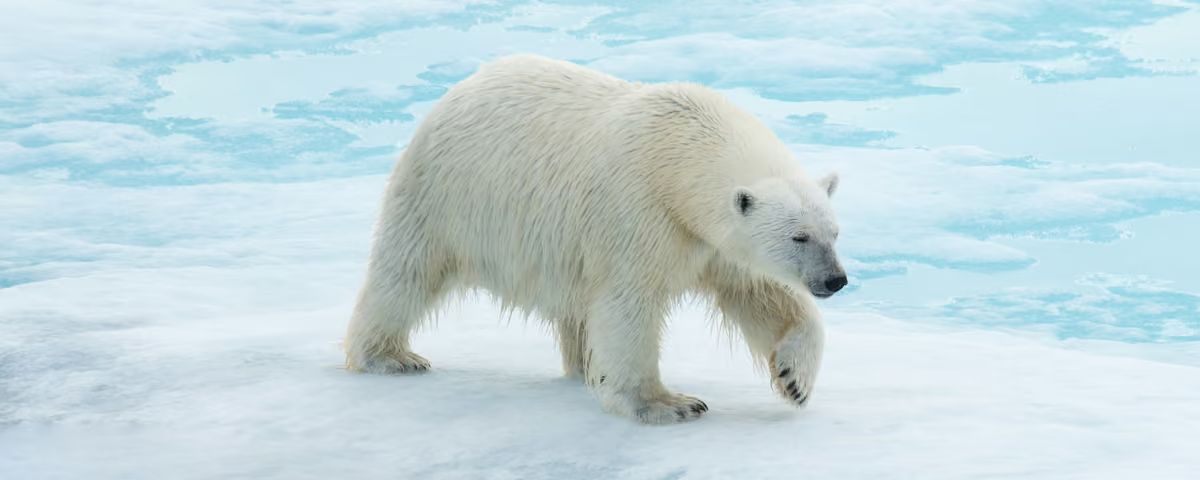
The Arctic and Antarctic have been distinct from the start: the Arctic comes from the Greek word for “bear” (Arktos), while Antarctica means “opposite the bear” (Antarktikos), thought to refer to the Great Bear constellation of Ursa Major visible only in the north. Fittingly, the Arctic is home to polar bears, while the Antarctic has none. So, one is Bear (and has bears), the other is No Bear (and doesn’t have them).
Thanks to the Arctic's tundra north of the treeline, plant growth in places like Greenland, Iceland Svalbard and northern Canada support a range of land mammals like reindeer, foxes, wolves, muskoxen and, of course, polar bears. Unique birds like puffins and snowy owls also add to the diversity, not to mention aquatic giants like narwhals and walruses. With no central landmass though, wildlife spotting can be quite challenging despite such variety.
By comparison, the Antarctic has no grass life of any sort. This means it has no capacity to support land mammals, but what it lacks in diversity it makes up for in scale. Something it has plenty of? Penguins. Emperor, king, Adelie, gentoo, and chinstrap penguins thrive here, along with vast numbers of seals, including unique species and giants like the elephant seal. The Antarctic’s nutrient-rich waters also attract whales in huge numbers: fourteen species of which are found only in the south, along with an estimated 160,000 orcas. Orcas, which are actually dolphins (named ‘killer whales’ by early sailors for their efficiency at hunting whales), can often be seen patrolling Antarctic waters, making them one of the region’s most dramatic wildlife encounters.
The When and Where
The Arctic is an ocean, surrounded by continents, and the Antarctic is a continent, surrounded by oceans.
Being on opposite sides of the planet, there are big differences in the times of year you can access them. Both regions have seas that freeze over during their winter, as well as very short daylight hours (or none at all), which makes access difficult. Because of this, both are visited during their warmer months, with the Arctic season running from late May to early October and the Antarctic season running from late October to early March.
Rather than being a static environment, each will also offer unique (but equally amazing) sightings as each season progresses. As a rough guide, early in their seasons, each will see a snowier environment as they emerge from a long winter. This means more icebergs, snow-covered landings and classic polar landscapes. As the season progresses, animals will tend to have their babies, so you will get to see animals like reindeer (Arctic) and penguins (Antarctic) feeding their young. This can also mean an increase in predation, so just be aware! Late season will see regions often choked with ice unlocked for further exploration, like the Northwest Passage (Arctic) and the Weddell Sea (Antarctica).
The Geography and People
The Arctic is a mixture of locations and people, the Antarctic is nothing but itself
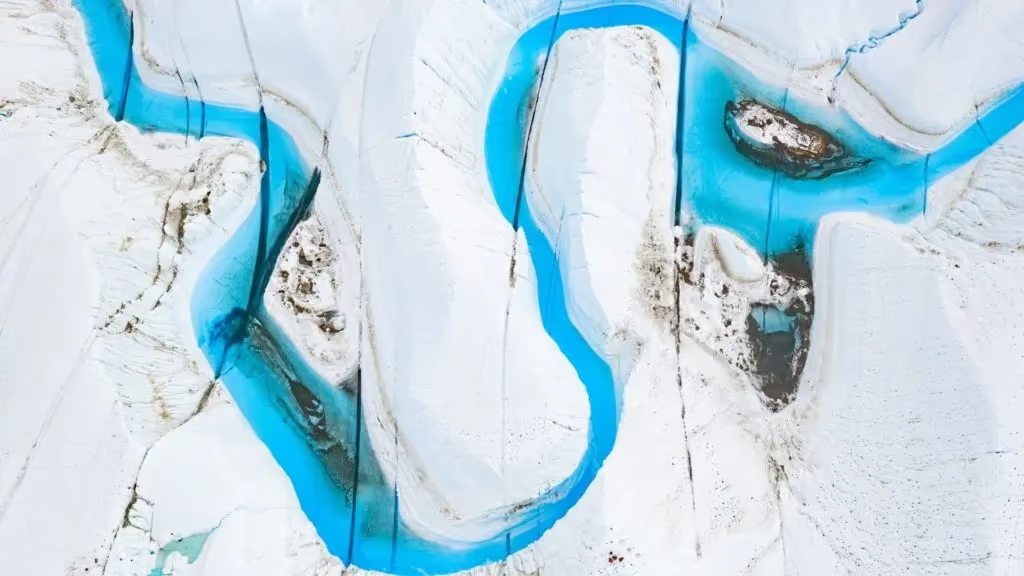
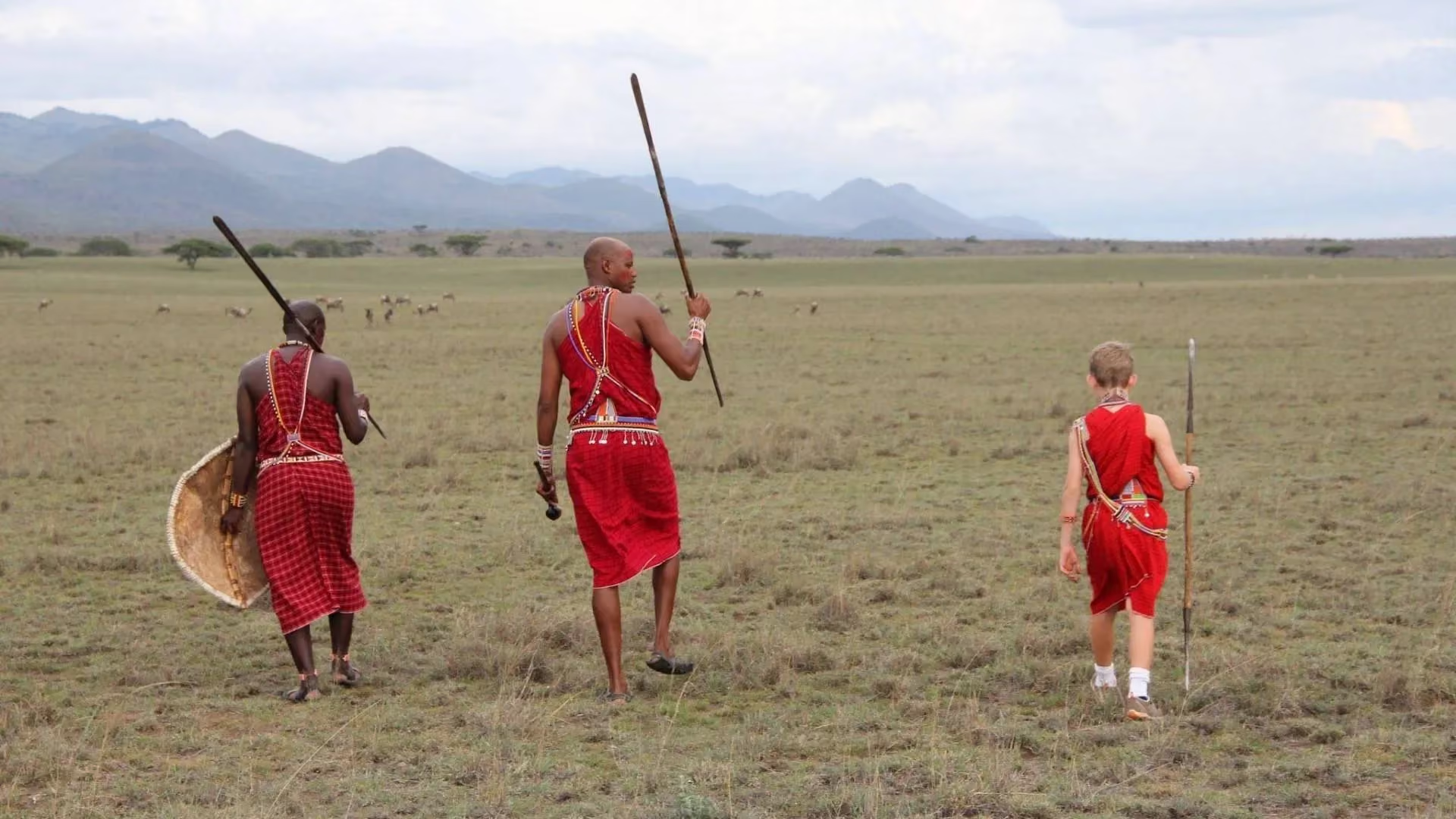
Being neither a single landmass nor a single country, the Arctic is a unique mix of landscapes and ecosystems. This means that each location you visit, whether it be Svalbard, Greenland, Iceland or the Canadian Arctic, is a unique environment with differing ways of life. You might find epic glaciers in one region, open tundra in another, giant fjords in some locations and active volcanoes in another. And, having been inhabited for thousands of years, each region has their own unique culture to explore. From the Inuit to the Thule to the Sami, this is a place rich with stories and tradition as generations of people have survived (and thrived) in this inhospitable part of Earth.
Meanwhile, the Antarctic sat alone for millennia. Inhospitable to human life and difficult to reach, the Antarctic remained unknown until relatively recent times. And despite modern advances, we still perch precariously on scientific bases as guests of the continent. This is a place of epic scale, where icebergs can be larger than countries and sheer glacial ice walls prevent any sort of passage. Antarctica is a vast continent, and also not a country, and in doing so, it remains aloof from any human influence. You come down to the Antarctic to be humbled.
In short...
The Antarctic
- Penguins, whales and seals
- Visited from late October to early March
- Vast scenery and utter remoteness
The Arctic
- Polar bears, walrus, reindeer and beluga
- Visited from late May to early October
- Cultural experiences, tundra and polar scenery